


Shade Guesswork
The color can look right in the bottle but feel disconnected at the jawline.
📧Need help? Email us anytime: support@onxnx.com
📧Need help? Email us anytime: support@onxnx.com
📧Need help? Email us anytime: support@onxnx.com
📧Need help? Email us anytime: support@onxnx.com
📧Need help? Email us anytime: support@onxnx.com
📧Need help? Email us anytime: support@onxnx.com
📧Need help? Email us anytime: support@onxnx.com
📧Need help? Email us anytime: support@onxnx.com
📧Need help? Email us anytime: support@onxnx.com
📧Need help? Email us anytime: support@onxnx.com
📧Need help? Email us anytime: support@onxnx.com
📧Need help? Email us anytime: support@onxnx.com
📧Need help? Email us anytime: support@onxnx.com
📧Need help? Email us anytime: support@onxnx.com
📧Need help? Email us anytime: support@onxnx.com
📧Need help? Email us anytime: support@onxnx.com
Couldn't load pickup availability


A lightweight, color-developing liquid foundation that starts pale, reveals tint while you blend, and helps create a more even-looking complexion—without the heavy mask-like finish.
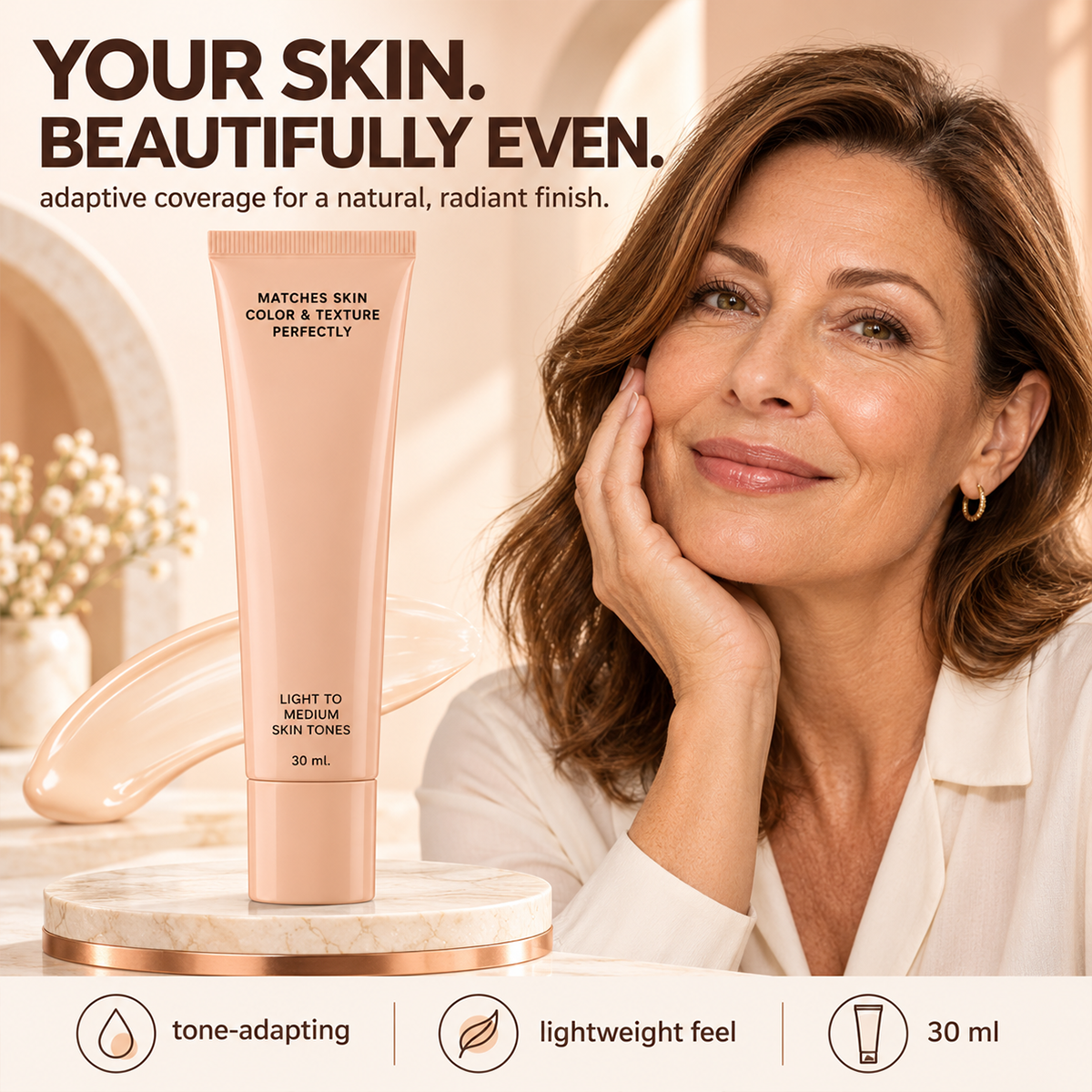
Too orange. Too pale. Too thick. Clinging to dry areas or gathering around expression lines. More foundation is not always the answer.
The color can look right in the bottle but feel disconnected at the jawline.
Thick layers can flatten your complexion's natural dimension.
Product buildup may make pores, fine lines, and dry patches stand out.
Multiple layers and touch-ups can make a simple morning routine feel complicated.
The light-looking base reveals visible tint during blending. Rather than relying on a thick first layer, apply a small amount and let the shade develop before deciding if you need more.

Think more balanced-looking tone, less visible unevenness, and the skin you recognize underneath. Coverage is there when you want it—not an opaque layer everywhere.
For a polished everyday base, applied in light layers.
Because a real-looking finish does not need to erase every freckle or line.
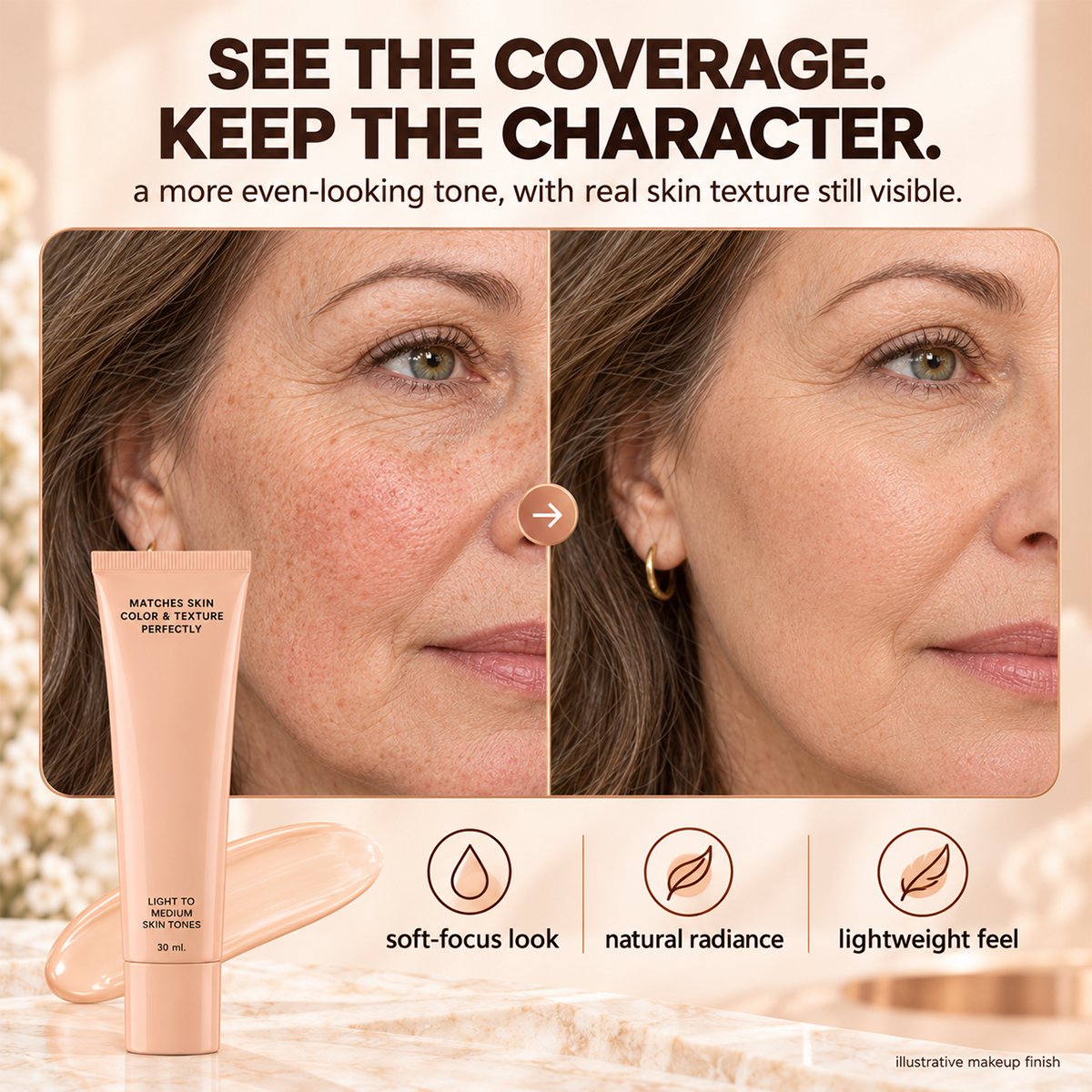
Start with less than you think you need. A thin, carefully blended layer can look fresher than applying more product all at once.
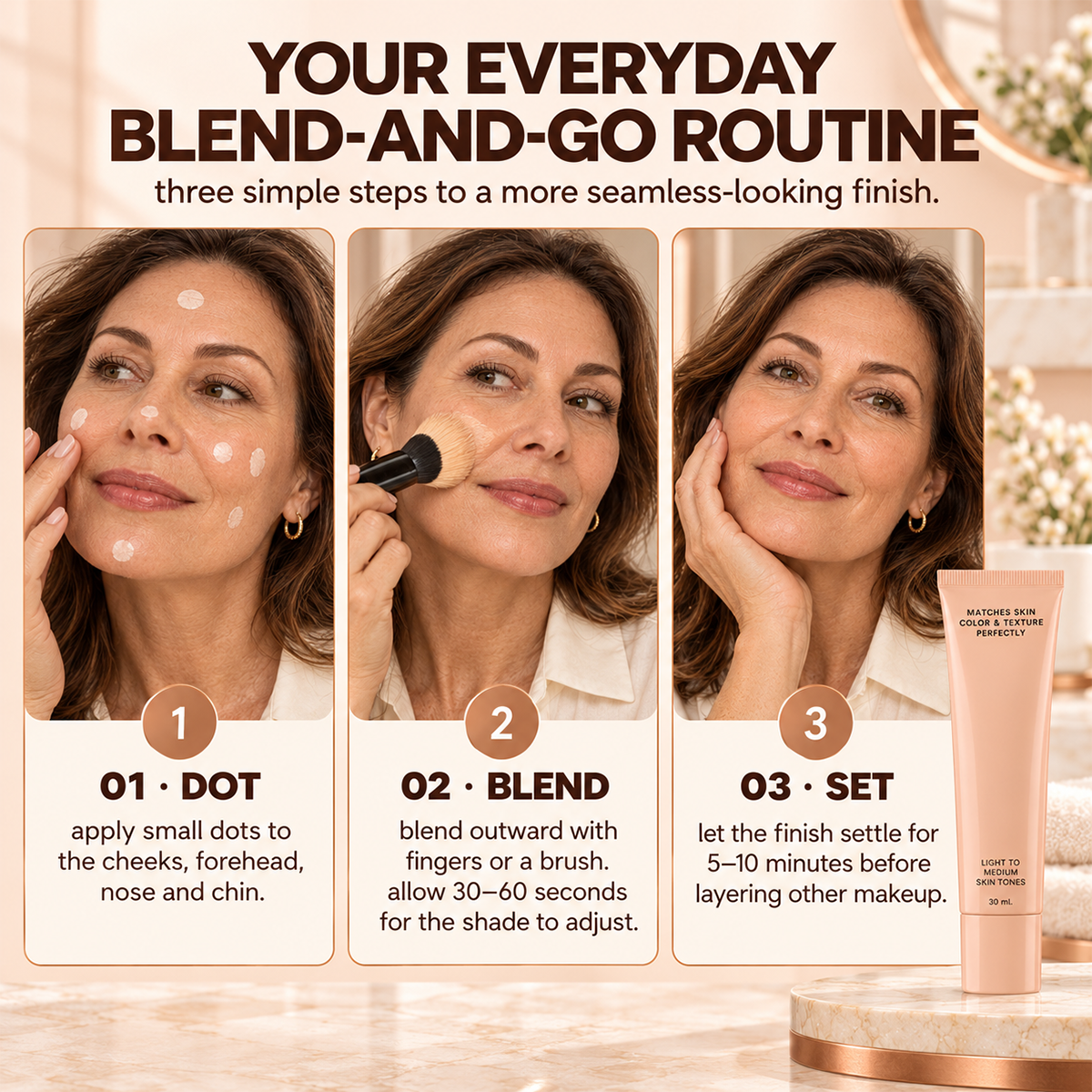
Start sheer over the full face, or focus your second layer only on places you prefer a little more correction. Keep the rest soft, fresh and natural-looking.
Build gradually over areas that need more color coverage.
Blend lightly instead of letting product collect on the surface.
A simpler, lightweight-looking base for your usual routine.

No makeup needs to promise perfectly poreless skin. If lines or dry-looking areas are part of your everyday complexion, a lighter-hand approach can help your makeup look less built up.

Choose the closest starting family first—Light or Medium. Color develops when blended, but it isn't one universal shade for every skin tone or undertone.

A starting option for lighter complexions. Look at the blended color along the jawline in natural light.

A starting option for medium complexions. Evaluate undertone after blending instead of judging the cream in the tube.
Full coverage and natural-looking coverage are different makeup preferences. This formula is designed for a flexible everyday finish.
More opacity upfrontFor a makeup look that conceals more of the skin underneath.
Precise initial shade matchUsually a fixed pigment shade in the bottle.
Potentially more visible textureThicker layers can collect in lines or dry-looking areas.
Skin-like, buildable lookBegin with a thin layer and add where preferred.
Tint appears as you blendWithin the selected Light or Medium family.
Targeted coverageUse extra product only on areas needing more correction.
Every complexion is different. Here are three customer perspectives on the way this foundation looks and blends.
“This blends much better with my olive tone”
“the finish looks polished without being heavy”
“looks softer and much more natural around my eyes”
A soft everyday base can be as light or as targeted as you need it to be.
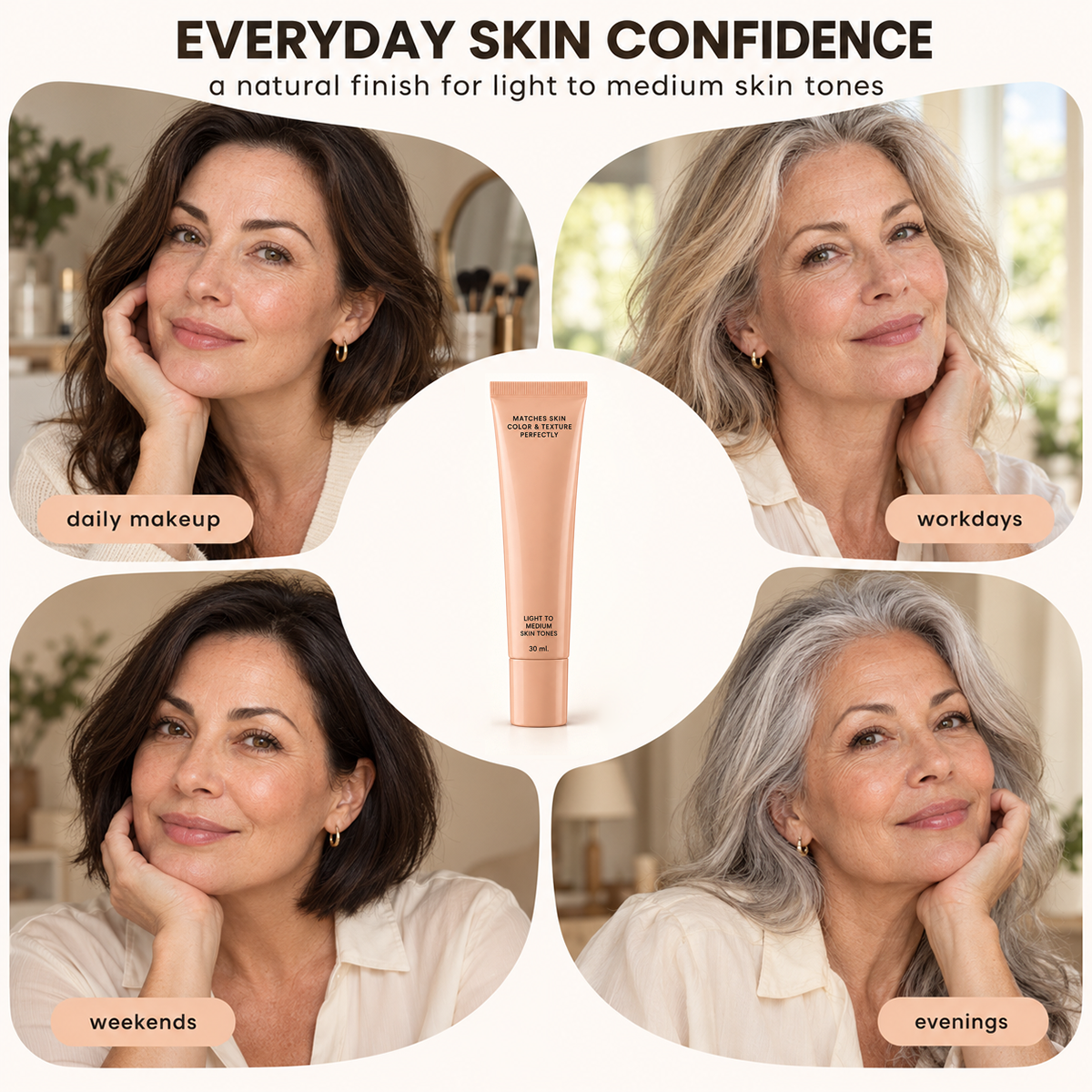
Blend one thin layer for a natural-looking, more even complexion.
Dot a little more over areas with redness or visible unevenness.
Use a small amount to refresh areas where your base needs attention.
The light-looking formula is designed to reveal visible pigment during blending. It does not detect your exact skin tone or guarantee a perfect match.
No. This product has Light and Medium starting shade families. Choose the one closest to your complexion; undertone and skin depth still matter.
No. This is a liquid foundation in a squeeze tube. Apply a small amount and blend with clean fingers, a sponge, or your own makeup brush.
It is positioned as natural-looking, buildable coverage. Apply in thin layers, or use concealer if you prefer a more opaque finish over a particular area.
No foundation can promise zero creasing. Applying moisturizer first, using less product, and avoiding heavy buildup can help you get a softer-looking result.
You will see tint as you blend. Give the layer a moment to settle and check it in natural light before adding more.
Generally, yes. Let your skincare and sunscreen settle first, then apply foundation. Keep using a separate sunscreen as directed; no SPF claim is made here.
Check the current full ingredient list and patch-test first. Discontinue use if irritation occurs.
Start with your closest shade, blend lightly, and build only where you want more coverage. Your everyday base should work with your skin—not hide it.